
INTERNATIONAL CONFERENCE
Margins Make Meaning: Punk, Post-Punk, and Cyberpunk across Literatures, Media, and Cultures
15-16-17 April 2027
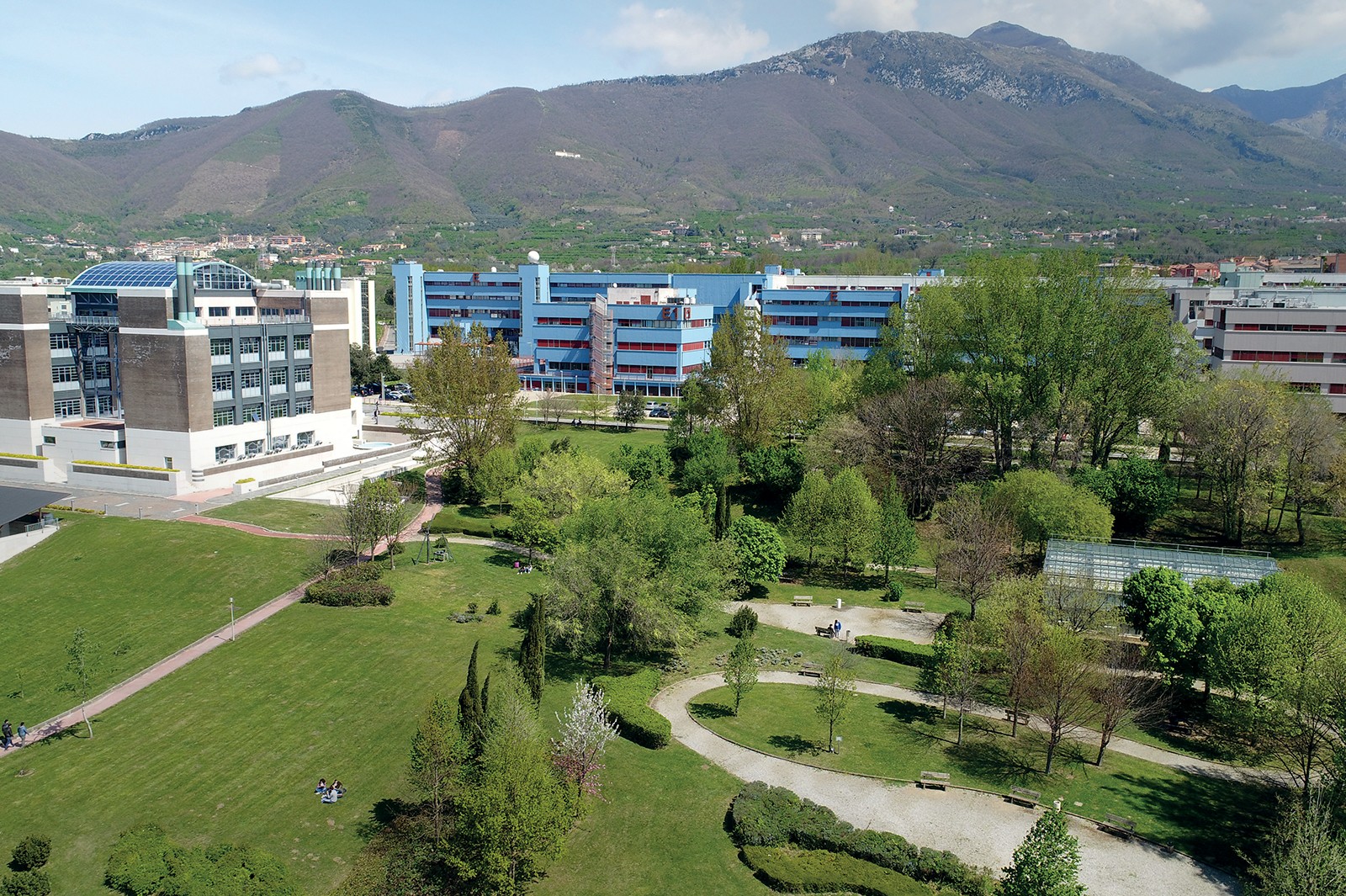
Venue: Università degli Studi di Salerno

Call for Proposals
Margins Make Meaning: Punk, Post-Punk, and Cyberpunk across Literatures, Media, and Cultures, organised by the Feeling / No Feelings conference series, now in its third edition, and developed in collaboration with the Margins Research Group, brings together punk and post-punk studies with broader reflections on margins as spaces of cultural production and critical negotiation. The conference explores punk and post-punk as cultural practices shaped through conflict, exclusion, experimentation, and alternative forms of cultural belonging. The conference welcomes contributions from literary and cultural studies, linguistics and discourse analysis, translation studies, sociology, media and visual culture, pedagogy, and related interdisciplinary fields. It aims to examine how punk and post-punk cultures challenge established forms of representation and legitimacy across different historical moments, from the emergence of punk in the mid-1970s to contemporary reactivations.
Within this framework, punk and post-punk are approached not as marginal objects in a reductive sense, but as practices that make the structures of the centre visible. Margins are understood not as spaces of lack, but as sites where aesthetic norms, identities, cultural hierarchies, and forms of representation are questioned and reworked. Hebdige’s reflections on subculture as resignification and friction with dominant culture remain central in this respect (1979). This perspective also enters into dialogue with Hall’s work on representation (1997) and Foucault’s analyses of discourse, visibility, and regulation (1977; 1978). The transition from punk to post-punk expanded these dynamics towards experimentation, visual culture, performance, and new media practices. Reynolds’ work on post-punk (2005), together with Ngai’s reflections on irony, flatness, and suspended affect (2005), offers useful perspectives for examining tensions between intensity and detachment, political urgency and anti-expressivity, and the relationship between affect and cultural production.
The conference also encourages work on literature, discourse, multimodality, translation, and cultural circulation. Literary texts, song lyrics, manifestos, interviews, fanzines, performances, visual materials, and digital practices all contribute to the production of meaning within punk and post-punk cultures. Particular attention may be given to literary representations of punk and post-punk, the relationship between literary form and subculture, and the ways literary texts engage with questions of marginality, identity, resistance, memory, and cultural change. Contributions on cyberpunk literature and related speculative traditions are also welcome, particularly where they intersect with questions of technological mediation, marginality, resistance, alternative futures, and countercultural imaginaries. Approaches drawn from literary studies, discourse analysis, multimodality, intermediality, and translation studies (van Dijk 2008; Kress and van Leeuwen 2001; 2006; Rajewsky 2005; Tymoczko 2007) are particularly relevant in this context.
Questions of identity, embodiment, scenes, cultural memory, and forms of preservation also remain central to the conference. Feminist critiques within subcultural studies (McRobbie and Garber 2006; Reddington 2012; LeBlanc 1999), together with work on scenes and cultural memory (Straw 1991; Thornton 1995; Cohen 1991; Duncombe 1997; Triggs 2006; Taylor 2003), provide important perspectives for examining how punk and post-punk cultures are produced, circulated, preserved, and reinterpreted across different contexts.
The conference welcomes historical and theoretical proposals, case studies, textual and visual analyses, archival research, and reflections on contemporary reactivations of punk and post-punk cultures.
Thematic Areas The following areas identify the main thematic directions of the conference. While interdisciplinary approaches are welcome, proposals should engage clearly with the conference’s core focus on punk and post-punk as forms of cultural production shaped through margins, discourse, media, and social practices:
- Punk, Post-Punk, and Cultural Margins We welcome contributions that explore punk and post-punk as cultural practices shaped through marginality, resistance, exclusion, conflict, and alternative forms of belonging. This area includes questions of identity, gender, class, sexuality, subculture, counterculture, social conflict, cultural politics, commodification, and forms of negotiation between underground and mainstream cultures. Particular attention may also be given to scenes, communities, urban spaces, peripheral geographies, and the relationship between centre and margin.
- Literature, Language, and Discourse This area focuses on lyrics, literary writing, manifestos, interviews, reviews, fanzines, and other textual or discursive forms connected to punk and post-punk cultures. We welcome contributions in literary studies, stylistics, discourse analysis, pragmatics, sociolinguistics, cultural linguistics, and rhetoric. Topics may include voice, irony, negativity, anti-rhetoric, metaphor, multilingualism, linguistic variation, the relationship between language and forms of cultural belonging or exclusion, as well as literary representations of punk and post-punk cultures, cyberpunk literature, speculative writing, and the intersections between literary form, technology, marginality, and subcultural imaginaries.
- Translation, Circulation, and Transnational Perspectives We invite proposals on translation, rewriting, adaptation, subtitling, dubbing, multilingual circulation, and the reception of punk and post-punk across different linguistic and cultural contexts. This area also includes studies on transnational scenes, local appropriations, cultural transfer, editorial mediation, and the ways non-Anglophone contexts reshape punk and post-punk cultures through translation and reinterpretation.
- Media, Visuality, and Multimodality This area includes visual culture, photography, cinema, performance, fashion, graphic design, album covers, comics, digital media, and intermedial practices. Contributions may explore margins and punk and post-punk as multimodal phenomena in which meaning emerges through the interaction of verbal, visual, sonic, bodily, and material elements. Studies on embodiment, self-styling, performance practices, and contemporary digital reactivations are also welcome.
- Scenes, Memory, and Cultural Production We welcome work on archives, fanzines, oral histories, DIY practices, underground publishing, collections, independent labels, and alternative networks of cultural production. This area includes reflections on memory, preservation, canon formation, and the circulation of marginal cultural materials, as well as studies on local scenes and informal or extra-institutional archives.
(Cont. to the bibliography below)
Bibliography
The following bibliography is indicative and non-prescriptive; it is intended to define the theoretical perimeter of the conference without exhausting possible frameworks:
Ahmed, Sara. Queer Phenomenology: Orientations, Objects, Others. Duke University Press, 2006.
Amendola, Alfonso, and Linda Barone, eds. Far above the World. David Bowie tra consumi culturali e analisi del discorso. Areablu Edizioni, 2017.
Amendola, Alfonso, and Linda Barone, eds. Our Vision Touched the Sky. Fenomenologia dei Joy Division. Rogas Edizioni, 2021.
Becker, Howard S. Outsiders: Studies in the Sociology of Deviance. Free Press of Glencoe, 1966.
Beer, David. Punk Sociology. Palgrave Macmillan, 2014.
Bennett, Andy. “Subcultures or Neo-Tribes? Rethinking the Relationship between Youth, Style and Musical Taste.” Sociology, vol. 33, no. 3, 1999, pp. 599–617.
Bernhard, Erin M. Contemporary Punk Rock Communities: Scenes of Inclusion and Dedication. Lexington Books, 2019.
Butler, Judith. Bodies That Matter: On the Discursive Limits of Sex. Routledge, 1993.
Cohen, Sara. Rock Culture in Liverpool: Popular Music in the Making. Clarendon Press, 1991.
Dines, Mike, Paula Guerra, and Russ Bestley, eds. The Punk Reader: Research Transmissions from the Local and the Global. Intellect, 2019.
Duncombe, Stephen. Notes from Underground: Zines and the Politics of Alternative Culture. Verso, 1997.
Foucault, Michel. Discipline and Punish: The Birth of the Prison. Translated by Alan Sheridan, Pantheon Books, 1977.
Foucault, Michel. The History of Sexuality, Volume 1: An Introduction. Translated by Robert Hurley, Pantheon Books, 1978.
Grimes, Matt, Russ Bestley, Mike Dines, and Paula Guerra, eds. Punk Identities, Punk Utopias: Global Punk and Media. Intellect, 2021.
Hall, Stuart, and Tony Jefferson, eds. Resistance through Rituals: Youth Subcultures in Post-War Britain. Routledge, 2006.
Hall, Stuart, ed. Representation: Cultural Representations and Signifying Practices. Sage, 1997.
Haraway, Donna J. Staying with the Trouble: Making Kin in the Chthulucene. Duke University Press, 2016.
Hardt, Michael. The Subversive Seventies. Oxford University Press, 2023.
Harman, Graham, and Mark Fisher. Flatline Constructs: Gothic Materialism and Cybernetic Theory-Fiction. Zero Books, 2025.
Hebdige, Dick. Subculture: The Meaning of Style. Methuen, 1979.
hooks, bell. “Choosing the Margin as a Space of Radical Openness.” Framework: The Journal of Cinema and Media, no. 36, 1989, pp. 15–23.
hooks, bell. Elogio del margine. Scrivere al buio. Translated and edited by Maria Nadotti, Tam Edizioni, 2020.
Home, Stewart. Cranked Up Really High: Genre Theory and Punk Rock. Codex, 1995.
Kress, Gunther, and Theo van Leeuwen. Multimodal Discourse: The Modes and Media of Contemporary Communication. Arnold, 2001.
Kress, Gunther, and Theo van Leeuwen. Reading Images: The Grammar of Visual Design. 2nd ed., Routledge, 2006.
LeBlanc, Lauraine. Pretty in Punk: Girls’ Gender Resistance in a Boys’ Subculture. Rutgers University Press, 1999.
McRobbie, Angela, and Jenny Garber. “Girls and Subcultures.” Resistance through Rituals: Youth Subcultures in Post-War Britain, edited by Stuart Hall and Tony Jefferson, 2nd ed., Routledge, 2006.
Mooney, Annabelle, and Betsy Evans. Language, Society and Power: An Introduction. 6th ed., Routledge, 2023.
Naylor, Simon, et al. Cultural Turns/Geographical Turns: Perspectives on Cultural Geography. Taylor & Francis, 2018.
Ngai, Sianne. Ugly Feelings. Harvard University Press, 2005.
O’Hara, Craig. The Philosophy of Punk: More Than Noise!. AK Press, 1999.
Rajewsky, Irina O. “Intermediality, Intertextuality, and Remediation: A Literary Perspective on Intermediality.” Intermédialités, no. 6, 2005, pp. 43–64.
Reddington, Helen. The Lost Women of Rock Music: Female Musicians of the Punk Era. 2nd ed., Equinox, 2012.
Reynolds, Simon. Rip It Up and Start Again: Postpunk 1978–1984. Faber and Faber, 2005.
Stewart, Francis, and Laura Way, eds. Punk Pedagogies in Practice: Disruptions and Connections. Intellect, 2023.
Straw, Will. “Systems of Articulation, Logics of Change: Communities and Scenes in Popular Music.” Cultural Studies, vol. 5, no. 3, 1991, pp. 368–388.
Taylor, Diana. The Archive and the Repertoire: Performing Cultural Memory in the Americas. Duke University Press, 2003.
Thornton, Sarah. Club Cultures: Music, Media and Subcultural Capital. Polity Press, 1995.
Triggs, Teal. “Scissors and Glue: Punk Fanzines and the Creation of a DIY Aesthetic.” Journal of Design History, vol. 19, no. 1, 2006, pp. 69–83.
Tymoczko, Maria. Enlarging Translation, Empowering Translators. St. Jerome, 2007.
van Dijk, Teun A. Discourse and Power. Palgrave Macmillan, 2008.
Worley, Matthew. No Future: Punk, Politics and British Youth Culture, 1976–1984. Cambridge University Press, 2017.
(Cont. to the submission guidelines below)
Submission Guidelines
We invite proposals for papers in the form of a 250-word abstract, accompanied by a brief biographical note. The abstract should clearly indicate the topic of the paper, the corpus or case study, the methodological angle, and the thematic area to which it refers.
Abstracts should be sent by 31 January 2027 to the following email address: feelingnofeelings.margini@unisa.it
Languages of proposals and papers: English, Italian.
Following notification of acceptance, participants will be required to pay a conference registration fee of €100 by 1 March 2027. Payment details and instructions will be communicated at a later stage.
The abstract and biographical note should be attached as two separate Word files, named as follows:
Surname_Name_FNF2027_Abstract
Surname_Name_FNF2027_Bionote